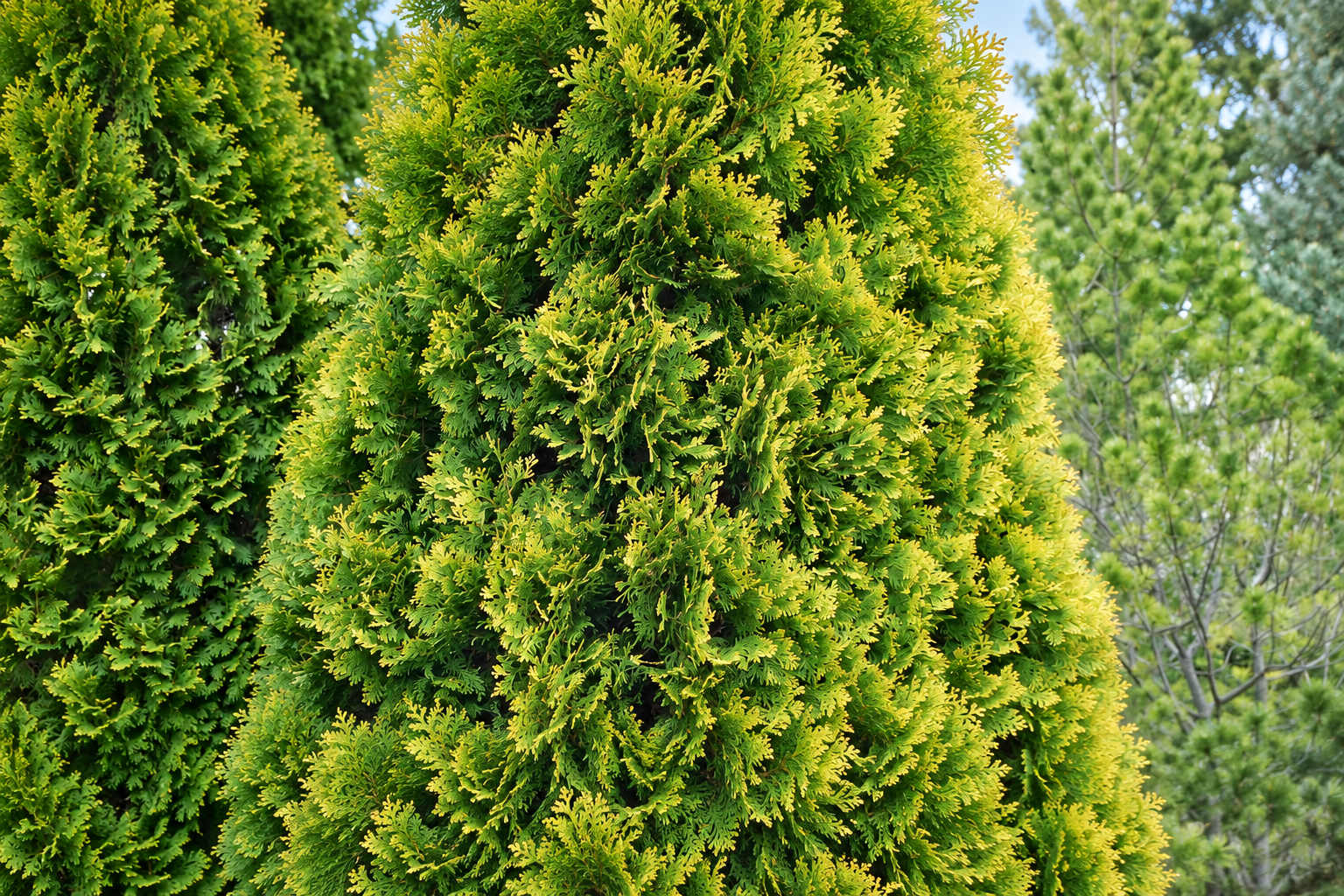
Arborvitae bring year-round structure and privacy to Maine gardens, but winter can be hard on their evergreen foliage and upright branches. Heavy snow can pull stems apart, deer can strip reachable growth, and sun and wind can dry foliage while roots are locked in frozen soil.
Late fall is the time to assess your plants and prepare the protection they actually need. Newly planted arborvitae and exposed hedges deserve particular attention. A sheltered, established plant may need much less intervention.
Start with Moisture Before the Ground Freezes
Evergreens continue losing moisture through their foliage in winter. When frozen ground limits water uptake, drying winds and bright sun can lead to winter burn. Going into winter drought-stressed makes the challenge greater.
Check the soil during dry fall weather, including the original root ball of recently planted trees. Water slowly at ground level when needed so moisture reaches the roots. Adjust to rainfall and drainage: moist soil is helpful, while persistently saturated soil can damage roots. Continue monitoring until the ground freezes.
Our fall watering guide offers more seasonal advice. Maintain a 2- to 3-inch mulch layer over the root area, keeping it away from trunks and stems.
Support Narrow Plants Against Snow
Upright varieties such as 'Emerald Green' ('Smaragd') and 'Degroot's Spire' can have branches or multiple leaders that spread under heavy, wet snow. If your plants have splayed in previous winters, gentle seasonal support may help.
- Work before storms arrive. Bring flexible branches together gently in their natural upright position. Don't force rigid stems or try to repair a split trunk by tying it shut.
- Use soft material. Spiral garden twine around a manageable plant, supporting the branches without cinching them into a tight bundle. Avoid wire or narrow material that can cut into bark.
- Check the fit. The support should not crush foliage, rub stems, or restrict growth. Remove temporary bindings in spring.
Large plants, weak branch unions, and existing splits need individual assessment. Ask a qualified arborist about structural problems rather than relying on a few thin stakes to carry a heavy snow load.
Use Burlap as a Wind and Sun Screen
Plants exposed to prevailing winter winds or strong south and southwest sun may benefit from a breathable burlap screen. A screen supported on stakes protects foliage while allowing air to move around it.
- Install supports before the soil freezes. Position sturdy wooden stakes outside the branches, avoiding major roots and allowing clearance for fabric movement.
- Screen the exposed sides. Attach burlap securely on the windward and sunny sides. If protection is needed all around, leave the top open for air and light.
- Check after storms. Repair loose fasteners and keep fabric from rubbing against foliage.
Avoid tightly cocooning plants in plastic or placing a heavy cover over the top that can collect snow. Install the fabric as winter weather approaches and remove seasonal screens in spring as the soil thaws and conditions moderate.
Plan Separately for Deer
Arborvitae are a favored browse plant, and a hungry deer can leave a hedge bare at feeding height. Deep snow can raise that feeding level considerably.
Where browsing is a recurring problem, use a securely installed deer barrier or appropriately designed fencing. For a small plant, a rigid enclosure must keep foliage beyond reach through or over the barrier. A row or large planting may need a properly planned perimeter fence. Height, strength, layout, and expected snow depth all matter; a loosely stapled burlap panel is not a dependable substitute.
Repellents can supplement protection, but results vary and applications may need repeating. Choose a product labeled for the plant and use it exactly as directed. Inspect barriers through winter, especially after drifting or plowing changes the snow level.
Keep Salt and Plowed Snow Away
Arborvitae can be injured by salt spray on foliage and by salt entering the root zone. A roadside burlap barrier can reduce splashing, but it cannot stop salty runoff from moving through soil.
Plan snow storage away from the hedge, direct snowblower discharge elsewhere, and avoid piling treated snow over roots. Use deicers sparingly according to their labels and consider traction materials where appropriate. If a planting repeatedly suffers beside a driveway, address drainage and salt exposure rather than adding more wrapping each year.
Handle Snow and Ice Gently
After a storm, inspect plants from a safe position. If loose snow is weighing down accessible branches, gently lift or brush it off with an upward motion. Avoid beating the plant or pulling down on loaded branches.
Leave ice attached to foliage and stems to melt naturally. Trying to chip it away or bend frozen branches can cause more damage. Keep clear of overhead hazards, and call an arborist for large broken limbs or split leaders. Seasonal supports reduce some risks, but they cannot prevent every injury.
Assess Browning Before You Prune
Some inner foliage naturally yellows and sheds in fall. Some varieties also take on a bronze winter color. These changes are different from extensive dead outer growth, salt injury, or deer browsing.
If browning appears in spring, take photos and check the pattern before reaching for shears. Wait for new growth to help reveal what is alive, unless broken branches need prompt attention. Arborvitae often do not fill back in well from bare old wood, so avoid cutting deeply into leafless branches in an attempt to reshape a damaged hedge.
Winter burn, root problems, and salt injury can look similar. Seek a diagnosis when damage is severe or recurring, and use fertilizer only when a need has been identified.
Your Late-Fall Checklist
- Check moisture and water as needed before freeze-up.
- Inspect mulch and keep it clear of stems.
- Add gentle snow support only where needed.
- Install breathable screens for exposed sites.
- Secure deer protection and plan snow storage.
- Recheck after storms and remove temporary protection in spring.
Bring photos of your arborvitae and their surroundings, or contact the Estabrook's team, for help selecting protection suited to your garden. A little preparation now can reduce winter damage and make spring recovery easier.
Additional guidance: UMaine Extension on arborvitae and salt injury, UMaine Extension on arborvitae stress, University of Minnesota Extension's winter protection guide, and New York Botanical Garden's arborvitae care guide.