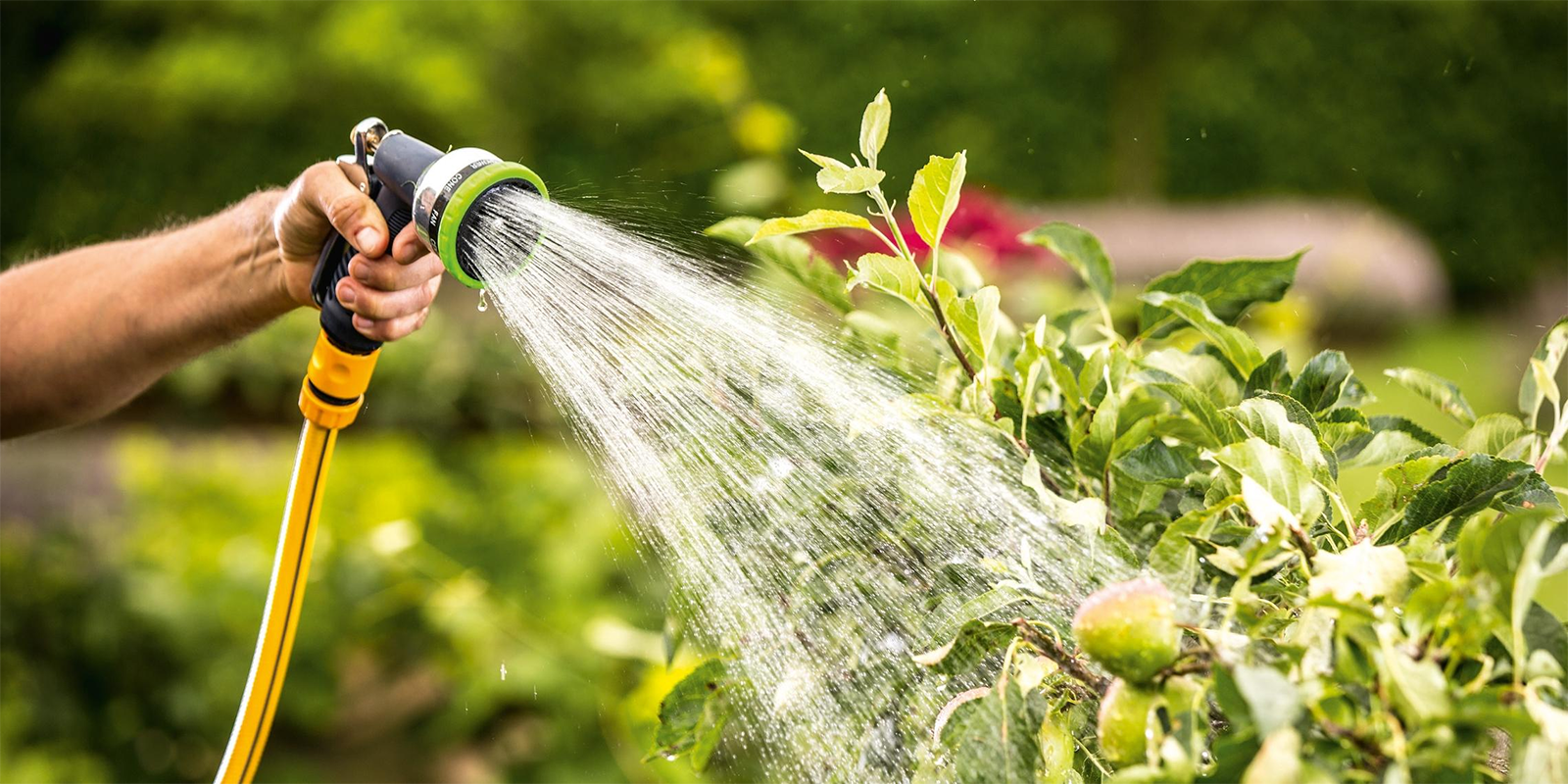
During periods of little to no rain, a steady watering routine can protect your landscape and prevent bigger problems later. Follow these tips to help your plants and lawn through hot, dry weather.
Signs of Water Stress
- Yellowing, curling, drooping or dropping leaves
- Early fall color
- Excessive interior needle drop on evergreens
- Lawns turning dull green, yellow or brown
- Increased insect or disease problems
If plants are showing these signs, check the soil several inches below the surface. If it's dry, it's time to water.
Watering Priorities
- New plantings come first. Newly planted trees, shrubs and perennials need consistent moisture while their roots become established.
- Water deeply. Slow, thorough watering encourages deeper roots and is better than frequent, shallow sprinkling.
- Water in the morning. Early morning watering reduces evaporation and gives plants moisture before the hottest part of the day.
- Pay attention to evergreens. Consistent moisture in late summer and fall helps reduce drought stress and prepares evergreens for winter.
- Check before watering. Soil should be moist several inches down but not constantly saturated.
Make Watering More Effective
- Mulch your beds. A 2-3 inch layer of mulch helps retain moisture and moderate soil temperatures. Keep mulch away from trunks and stems.
- Use the right tool. Sprinklers work well for lawns and larger beds, while hoses, soaker hoses and drip irrigation provide more precise watering around individual plants.
- Check your coverage. Look for broken or misaligned sprinklers, dry spots and water running onto pavement instead of your landscape.
Lawns During Dry Weather
- Water deeply and less frequently if you're keeping your lawn actively growing.
- Mow higher. Keeping grass around 3-4 inches tall helps shade the soil and conserve moisture.
- Limit traffic on brown or drought-stressed areas.
- Watch for weeds and grubs. Drought-stressed turf can be more susceptible to other problems.
Watch Your Plants
Hydrangeas, black-eyed Susans, impatiens and other moisture-loving plants often wilt quickly during dry weather and can serve as an early warning that your landscape needs water.
Consistent, efficient watering during dry spells can make a big difference. Focus on the plants that need it most, water deeply and keep checking soil moisture until regular rainfall returns.