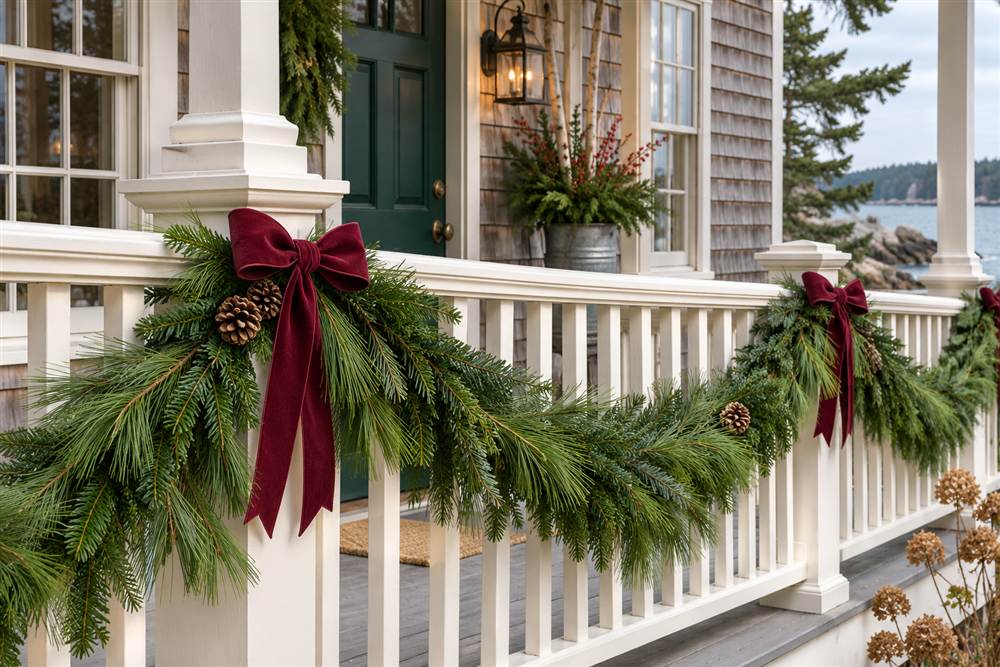
A sweep of fresh evergreen roping can turn a porch railing into a holiday welcome, soften a doorway, or bring woodland texture to a mantel. Add a few loose greens, a favorite ribbon, and pine cones, and you have a display that feels right at home in Maine.
The best results start with a little planning. Choose greenery that suits the shape of your project, measure the route it will follow, and give fresh cut branches a cool setting whenever possible. Here's how to put it all together.
Choose Roping for Structure and Loose Greens for Finishing
Roping, also called garland, is a continuous length of evergreen branches secured to a cord or wire core. It gives you a ready-made foundation for long railings, doorway outlines, and sweeping swags. Individual evergreen branches are useful for filling gaps, building porch pots, and adding fullness at attachment points.
Estabrook's fresh evergreen roping selection includes several looks. Styles and lengths vary with seasonal availability:
- Balsam fir: A full, traditional evergreen look with the familiar fragrance of a Maine Christmas.
- White pine: Long, soft needles create an airy appearance that works well in relaxed swags.
- Western red cedar: Flattened sprays give garlands a graceful, flowing texture.
- Mixed roping: Combinations such as white pine and balsam or pine and boxwood bring contrasting needle shapes and foliage into one strand.
Choose one roping style as your foundation, then repeat the same ribbon or accent throughout the display. A few consistent materials will help the porch, front door, and indoor decorations feel connected.
Measure the Shape You Want to Create
Use a flexible tape measure or a piece of string to trace the actual path of the garland before shopping. A straight railing measurement will not account for dips, loops, or tails.
- For railings: Drape string between your planned attachment points at the depth you like, then measure the string.
- For a doorway: Measure up one side, across the top, and down the other. Include any desired overhang and room to turn the corners.
- For a mantel: Measure across the shelf and add the length of each hanging end. An asymmetrical design can have one long tail and one short end.
- For a wrapped post: Spiral string around the post at your preferred spacing rather than estimating from the post's height.
Bring your measurements and a photo of the space when you visit. Check the available coil lengths or cut-length options before deciding how many pieces to use. Allow some extra for joining sections and making adjustments.
Give the Porch a Welcoming Focal Point
Start with the feature guests notice first: the front door, a pair of porch columns, or the railing beside the steps. Framing one area generously often has more impact than spreading a small amount of greenery over every surface.
For a classic entrance, outline the doorway with roping and repeat its texture in two porch containers. For a simpler look, hang a loose swag above the door and finish each end with a bow. Position greenery so the door swings freely and address numbers, lighting, and door hardware remain visible.
Loose greens can finish outdoor pots with upright branches toward the center and softer sprays spilling over the rim. Secure the stems in a stable container, and keep the finished arrangement out of the walking and snow-shoveling route.
Drape Railings Without Blocking the Handrail
Attach roping along the outside face of a porch railing, keeping the top clear where people need a secure grip. Gentle, repeated swags give an orderly look; a straight run is useful on a small porch or a narrow stairway.
Use ties or hangers suited to the railing material and outdoor conditions. Support the garland at multiple points so one fastener does not carry the entire weight. Fasten around its supporting core rather than tugging on foliage, and avoid crushing branches. Follow product directions for adhesive hooks, including surface preparation, temperature limits, and weight capacity.
Hide joins and ties with small bows or clusters of cones. Keep wire ends tucked away from hands, and check the display after wind or heavy snow. Leave steps and gates clear.
Style a Mantel with Freshness and Heat in Mind
Lay the garland out on a protected work surface first. Find its center, decide where the ends will fall, and add a few accents before moving it into place. Secure it against slipping, and use a waterproof protective layer that is safe for the mantel finish wherever damp greens or sap might touch.
A mantel above a working fireplace may be too hot for fresh greenery. Follow the fireplace or stove manufacturer's clearances for combustible decorations, and keep garland, hanging tails, ribbon, and stockings clear of heat and flames. If the location cannot meet those requirements, decorate a console, sideboard, or unused mantel instead. Use flameless candles, and keep any electrical components dry.
Warm indoor air dries cut branches much faster than a cool porch does. Put indoor greenery up closer to a gathering and plan to replace it as needed.
Keep the Finishing Touches Simple
Let the greens provide most of the texture. Choose two or three accents, such as pine cones, ribbon, and shatter-resistant ornaments. Repeat them at the ends of a doorway garland or the high points of railing swags.
Use decorations rated for the location. If you add lights, follow their instructions for use with natural greenery, choose outdoor-rated sets for porches, and inspect cords before hanging. Attach accents independently so removing a bow or light strand does not pull the garland apart.
Help Fresh Greens Last
Choose flexible foliage without extensive browning or heavy shedding. Until decorating day, store greenery somewhere cool, sheltered, and ventilated. For outdoor displays, shade and protection from drying wind are helpful. Indoors, avoid sunny windows and heating vents.
Plain greens may be lightly misted regularly when temperatures are above freezing, provided surrounding surfaces are protected. Keep water away from lights and moisture-sensitive decorations. Misting will not restore branches that are already brittle. Inspect indoor arrangements often and remove them promptly when they dry.
At the end of the display, separate greenery from cord, wire, lights, and ornaments. Follow local disposal or collection rules. Bag greens containing boxwood for disposal rather than composting them, because cut boxwood can carry plant disease. Never burn dry garland in a fireplace or woodstove.
Ready to get started? Browse our fresh evergreen roping, then bring your measurements to Estabrook's. For more placement and care tips, see our Christmas Wreath DO's and DO NOT's.
Additional guidance: University of Maine Cooperative Extension on fresh balsam greenery and storage and Iowa State University Extension on cut evergreen care and disposal.