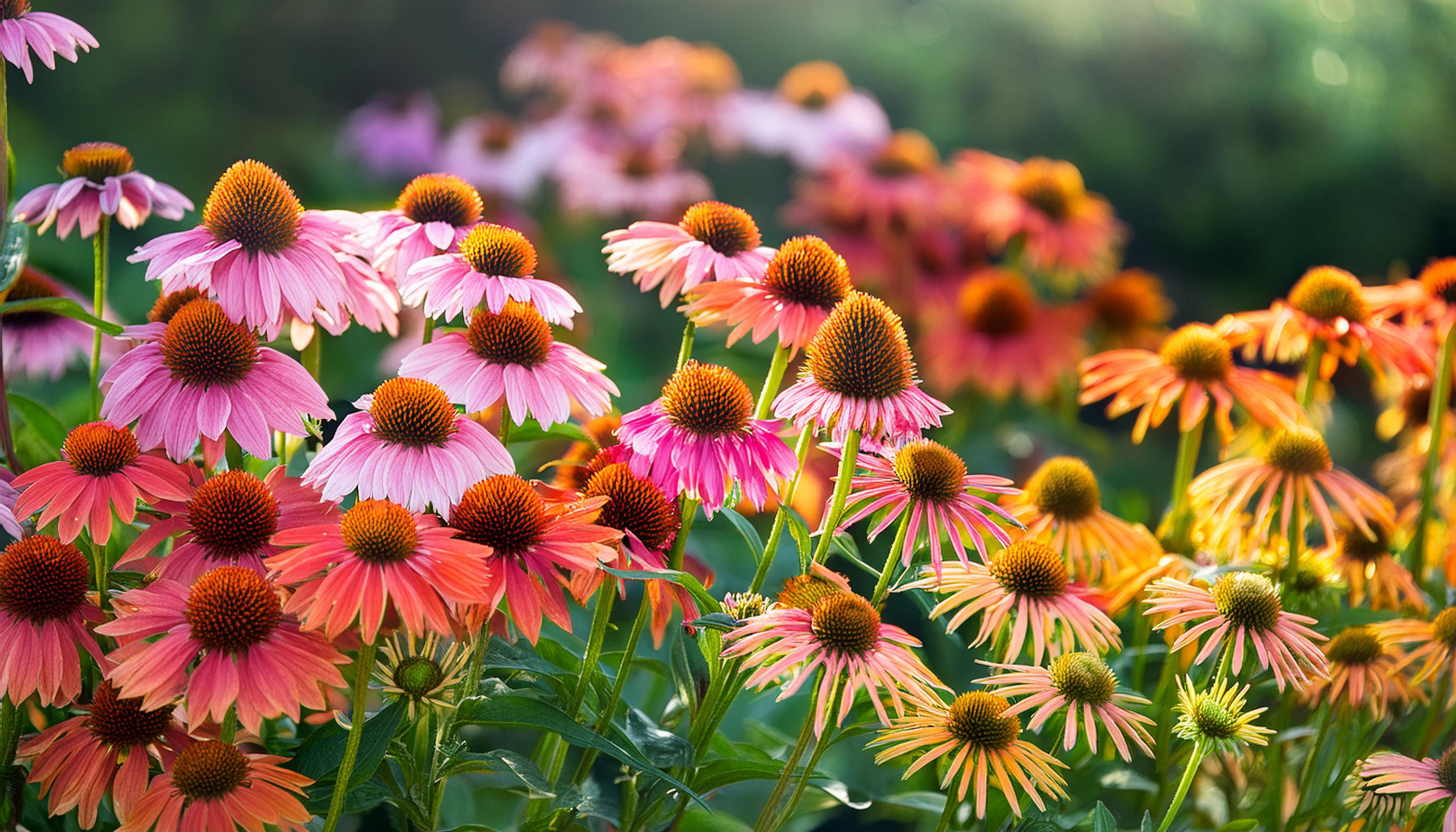
If you're looking for a perennial that delivers months of colorful blooms, attracts butterflies and bees, and asks for very little in return, it's hard to beat coneflowers (Echinacea). Can you have too many? We certainly don't think so. They're as irresistible to gardeners as chocolate is to dessert lovers, and with so many colors, shapes, and sizes available, it's easy to find room for just one more.
Native to North America, coneflowers are among the easiest perennials to grow. They bloom from early summer well into fall, tolerate heat and drought once established, and provide an important source of nectar for bees, butterflies, and other pollinators. As the flowers fade, their seed heads become a favorite food source for goldfinches and other songbirds, extending their value well beyond the growing season.
Something for Every Garden
Today's coneflowers offer far more than the classic purple blooms many gardeners remember. Plant breeders have introduced an incredible assortment of varieties in nearly every color imaginable, including rich reds, brilliant oranges, sunny yellows, creamy whites, soft greens, coral, and every shade of pink in between.
There's also a coneflower for every size garden. Compact selections like 'Puff Vanilla' stay just 16-18 inches tall, making them perfect for containers, borders, and smaller landscapes. Taller varieties such as 'Happy Star' can reach over 3 feet, adding height and structure to perennial beds.
Endless Variety
Not all coneflowers look alike. Flower forms range from the classic daisy shape of 'Magnus' to fully double varieties like 'Butterfly Kisses' with fluffy pom-pom centers. Some cultivars feature long, narrow petals that gracefully droop downward, while others have broad, overlapping petals that create a fuller appearance, such as 'Sombrero Lemon Yellow II'.
Bloom size varies just as much. Large-flowered selections like 'Ruby Star' can produce impressive blooms up to 6 inches across, while compact varieties such as 'Sombrero Adobe Orange' produce charming, button-sized flowers that bloom in abundance.
Even the stems can add visual interest. Most coneflowers have green stems, but varieties like 'Fatal Attraction' feature dramatic deep purple-black stems that provide striking contrast even before the flowers open.
Easy to Grow
Coneflowers thrive in full sun and well-drained soil. Once established, they're remarkably drought tolerant and require very little maintenance, making them an excellent choice for both beginning and experienced gardeners. Most varieties are hardy in USDA Zones 3 or 4 through 9, depending on the cultivar.
Deadheading spent flowers encourages additional blooms throughout the summer, although leaving a few seed heads in place provides winter interest and food for birds. Coneflowers are also generally resistant to deer and rabbits, making them a dependable addition to many landscapes.
Great Garden Companions
Coneflowers blend beautifully with many other sun-loving perennials and ornamental grasses. Pair them with Salvia, Nepeta, Coreopsis, Rudbeckia, Agastache, or ornamental grasses for a colorful, pollinator-friendly planting that looks great from early summer through fall. Their long bloom season also makes them excellent cut flowers for indoor arrangements.
Visit Estabrook's
At Estabrook's, we carry more than 30 varieties of coneflowers each season, from timeless favorites to exciting new introductions. Whether you're looking to attract pollinators, add months of color to your landscape, or simply can't resist bringing home another beautiful perennial, our staff can help you choose the perfect coneflower for your garden.
With so many outstanding varieties to choose from, the only real challenge is deciding which ones to take home!