A Strong Start for New Plants
Plant With Confidence.
A little preparation and consistent watering can make all the difference. Use this guide to help your new trees, shrubs and perennials settle into their Maine garden.

Before You Begin
Cool Weather Makes Establishing Roots Easier.
Spring and fall are ideal times to plant trees and shrubs. Temperatures are cooler, moisture is easier to maintain and new roots can establish with less stress than during summer heat.
Trees & Shrubs
Nine Steps to Better Establishment.
Prepare a broad planting area, preserve the correct root-ball height and finish with a moisture-retaining basin.
- 01
Prepare a Wide Hole
Dig almost as deep as the root system and twice as wide. Loosen the soil surrounding the hole.
- 02
Set the Correct Height
Position the root ball about 2 inches above the existing grade. Score circling roots on pot-bound plants. Leave biodegradable burlap in place.
- 03
Release the Top
Untie string around the top of the root ball and completely remove plastic string. Do not remove the wire basket.
- 04
Amend the Backfill
Mix one shovel of peat moss, cow manure or compost with three shovels of existing soil.
- 05
Firm the Soil
Backfill and gently firm the soil around the base of the plant with your hands.
- 06
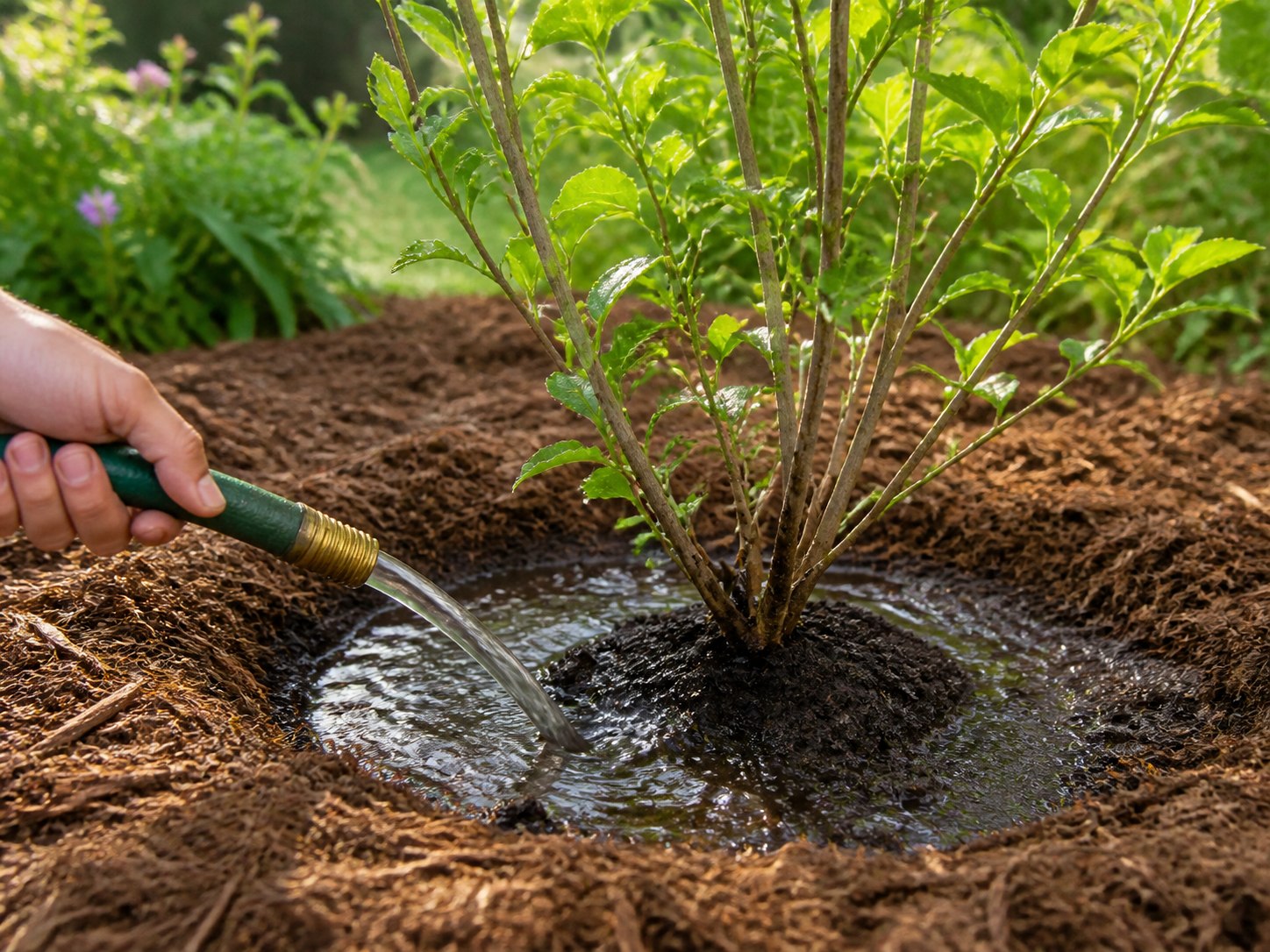
Build a Watering Basin
Create a shallow basin 3–4 inches deep with soil or mulch. Make it roughly 1½ times the root-ball diameter.
- 07
Water Thoroughly
Fill the basin 2–3 times to saturate the root system. Continue checking and watering regularly.
- 08
Support New Roots
Apply a root stimulant. Ask our team about fertilizer needs for your particular plant.
- 09
Finish With Mulch
Add 1–2 inches of bark or another mulch to retain moisture, keeping it 2–3 inches away from trunks and stems.
Tree & Shrub Watering
Water the Root Ball, Not Just the Surface.
Requirements vary with soil and weather. Plant foliage can shed rainfall away from the root ball, so check moisture even after it rains.
These amounts are starting guidelines. Adjust for drainage, rainfall, temperature and plant size.
Perennials
Prepare the Bed for Years of Growth.
Thoughtful spacing, rich soil and close moisture monitoring help perennial roots establish quickly.
- 01
Plan the Spacing
Choose the correct number of plants for the area. Check the plant tag, browse our online catalog or ask our team.
- 02
Improve the Soil
Pull back existing mulch. Incorporate balanced organic fertilizer and 2–4 inches of compost or composted cow manure into the planting area, then level it.
- 03
Prepare Each Plant
Water plants well, dig wider but no deeper than the root ball and gently loosen or score circling roots after removing the pot.
- 04
Plant at Grade
Set the plant level with the surrounding soil, backfill and firm gently. Form a shallow soil dish 6–8 inches from the crown to retain water.
- 05
Mulch and Water
Apply 3–4 inches of bark mulch or 1–2 inches of buckwheat hull mulch, then water thoroughly.
- 06
Monitor Daily
Check moisture every day for the first two weeks and water when needed until established. Provide extra water during drought.
Need a Second Opinion?
Bring Your Plant Questions to Us.
Our plant team can help with placement, soil preparation, watering and care.